
Home › Coverages › Pollution Liability Insurance for Electricians
Pollution liability for electrical contractors
Contractors pollution liability insurance pays for cleanup, injury and property damage claims when your work releases or spreads a pollutant, like oil from a cracked PCB ballast or dust from an asbestos ceiling you drilled. Electricians need it most on retrofits and renovations, because many contractor general liability policies carry a total pollution exclusion.
- Since 2003
- 12+ A-rated carriers
- 28 states
- Independent agents
Start your electrician insurance quote
Takes about a minute. A licensed agent follows up.
Licensed in 28 states · NPN 7642818 · Since 2003
What contractors pollution liability insurance does for an electrician
Contractors pollution liability (CPL) responds when your work causes or spreads a pollutant. It typically covers injury to people, damage to property, cleanup costs and your legal defense. For an electrical shop, the trigger is rarely the new gear. It's the old material you open up, unbolt or carry out.
Pollution is less central for electricians than for some trades. But it's very real on lighting retrofits, rewires in older homes and any job that cuts into an older building. Here's what you're likely to touch.
PCB ballasts, capacitors and transformers
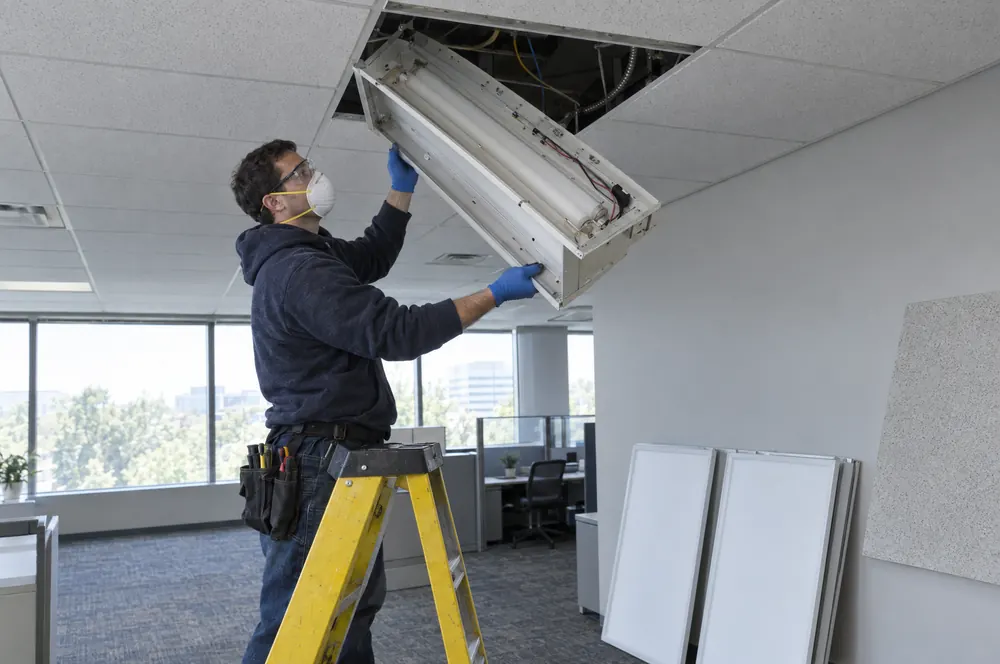
Fluorescent ballasts made before July 2, 1979 may contain PCBs. EPA rules say to treat a pre-1979 ballast capacitor as PCB-containing unless you can prove otherwise. Non-PCB ballasts built between July 1978 and July 1998 had to carry a "No PCBs" label, so an unlabeled old ballast is a red flag.
Once a small PCB capacitor leaks, EPA treats the release as unauthorized disposal and the ballast as regulated PCB waste. Older transformers and capacitors can also hold PCB dielectric fluid.
Mercury lamps
Fluorescent tubes and other mercury-containing lamps are "universal waste" under federal rules (40 CFR Part 273), along with batteries and mercury-containing equipment. The rules are streamlined, but they still govern how you store, handle and send lamps for recycling. States can be stricter, so check with your state environmental agency.
Lead paint and asbestos in older buildings
EPA's Renovation, Repair and Painting (RRP) rule lists electricians among the covered trades. Paid work that disturbs paint in housing or child-occupied facilities built before 1978 needs an EPA-certified firm and a certified renovator. The minor-repair exemption stops at 6 square feet per room inside or 20 square feet outside, and fishing a new circuit through plaster can pass that fast.
Asbestos is the other one. Before a renovation, the federal asbestos NESHAP requires the owner or operator to thoroughly inspect the affected area for asbestos-containing material. Drilling through old ceiling tile, pipe lagging or a panel backboard can disturb it.
Battery electrolyte
Sulfuric acid from UPS or standby lead-acid batteries, or a damaged lithium-ion cell, can hurt someone and leave a cleanup bill behind.
What CPL usually covers, and what it doesn't
| What CPL typically covers | What it usually doesn't |
|---|---|
| Injury claims from a release your work causes, such as tenants exposed to dust from a ceiling you opened | Asbestos or lead claims on CPL forms that exclude them (some do, so ask) |
| Property damage from contamination, like ceiling tile and carpet soaked by ballast oil | Pollution at your own shop or yard, which is a premises question |
| Cleanup and remediation costs, when the form includes them | Waste once it reaches a disposal site |
| Defense costs for covered pollution claims | Repairing or redoing your own work |
| Releases from completed work, depending on the form | Your own training and certification costs |
How a pollution claim can start on an electrical job
These are made-up examples to show how the coverage can work. Whether a real policy pays depends on its wording.
The retrofit in a medical office
Example scenario: A three-truck shop swaps T12 fixtures for LED troffers in a 1970s medical office over a weekend. One ballast cracks as it comes out of the fixture, and oil drips onto the carpet and two exam chairs. The owner closes the suite for testing and cleanup, then sends the shop the bill. With a total pollution exclusion on the GL, that claim may land only on a CPL policy.
The rewire in a pre-1978 duplex
Example scenario: A solo electrician rewires a 1950s duplex for a landlord. Chasing new home runs through painted plaster creates dust in a unit where a toddler lives. The tenant's family later claims lead exposure. A CPL form may respond to the injury claim if it doesn't exclude lead, which is why the form wording matters.
The ceiling that held asbestos
Example scenario: An apprentice drills old ceiling tile to hang a new conduit run in a school annex. Nobody inspected for asbestos first. The district shuts the wing for abatement and air testing and looks to the electrical sub for the cost.
Limits, triggers and what drives the price
CPL can be bought on its own or combined with contractors professional liability on one form, which suits shops that also sell design work. Some forms are written on an occurrence basis and some on a claims-made basis. Ask which one you're getting. A claims-made form needs an unbroken retroactive date, the cutoff before which past work isn't covered.
What you pay depends on your payroll and class codes, revenue, loss history, the type of electrical work you do and the limits you pick. For pollution coverage, the share of your work in older buildings and the retrofit, demo and battery jobs you take on usually weigh heavily too. Contracts often set the limit, so check the insurance exhibit before you price a job.
Which electricians need pollution coverage most
- Lighting retrofit and energy contractors pulling old fluorescent fixtures by the hundreds.
- Service and remodel electricians working in pre-1978 homes, where RRP rules and lead dust come into play. See our residential electrician insurance page.
- Commercial and industrial shops doing tenant improvements, demo and switchgear replacements in older buildings. Our commercial electrical contractor insurance page covers that stack.
- Shops installing or servicing battery systems, from UPS rooms to home storage.
New construction electricians have less of this exposure, but wrap-up projects and owner contracts can still require CPL.
Pollution coverage requirements by state
None of the state electrical licensing rules we've researched require contractors pollution liability to hold a license. The requirements come from somewhere else: EPA and state environmental agencies set the handling rules, and owners, GCs and public agencies set the insurance in their contracts. Your state's waste rules can be stricter than the federal ones, especially for lamps and batteries.
If you work in several states, tell us where. Find your state's license and insurance rules on our electrician insurance by state page.
Frequently asked questions
Does general liability cover pollution for electricians?
Do I need pollution insurance to change out old fluorescent ballasts?
Does contractors pollution liability cover asbestos?
Is contractors pollution liability occurrence or claims-made?
Can pollution coverage be combined with E&O?
Ready to see what you'd pay?
Independent agents, 12+ A-rated carriers, and a licensed agent back to you within one business day.