
Home › Coverages › Commercial Auto Insurance for Electricians
Commercial auto insurance for electrician vans and trucks
Commercial auto insurance for electricians covers the vans, box trucks and bucket trucks your shop owns, both for crashes you cause and for damage to the vehicles. Hired and non-owned auto extends the liability side to rentals and to techs who drive their own trucks on company business.
- Since 2003
- 12+ A-rated carriers
- 28 states
- Independent agents
Start your electrician insurance quote
Takes about a minute. A licensed agent follows up.
Licensed in 28 states · NPN 7642818 · Since 2003
What commercial auto insurance for electricians covers
Commercial auto insurance for electricians pays when one of your vehicles injures someone or damages their property, and it can pay to repair or replace the vehicle itself through comprehensive and collision. It covers business use and personal use of the vehicle alike.
Personal auto policies are generally priced for commuting and errands. A van titled to your LLC, lettered with your logo, loaded with reels and driven by employees is the kind of vehicle commercial policies are built for. Check your personal policy's business-use wording before you lean on it.
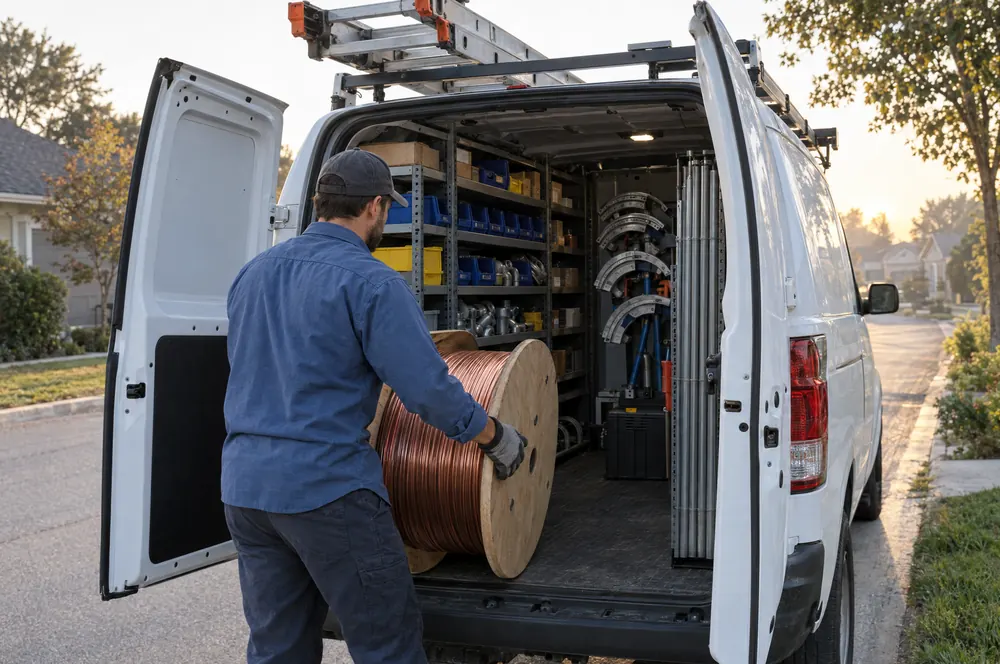
Upfits count as part of the vehicle. Shelving, ladder racks and bins bolted into the van are normally covered with it for physical damage. Loose gear is different: the meters, the hydraulic bender and the spools of THHN riding in back usually need a separate equipment policy.
Vans, box trucks and bucket trucks
Each vehicle type brings its own underwriting questions. Have the answers ready and the quote goes faster.
Service vans
The workhorse of a residential or light-commercial shop. Underwriters want to know who drives it, whether it goes home at night with a tech, and how far it travels in a typical week. Report the cost of every upfit, from shelving to a roof-mounted conduit tube, so the vehicle's value matches what you'd need to replace it.
Box trucks and stake bodies
Commercial shops use them to haul switchgear, fixtures by the pallet and reels of feeder cable to the jobsite. Heavier vehicles and bigger loads raise the stakes on any crash, which often pushes contract limits up too. Materials on board for a project are a separate question for an installation floater.
Bucket trucks and digger derricks
These are the trucks where one policy rarely does the whole job. The caveat below explains the split. If you're adding your first aerial device, call before it goes into service.
| Usually covered | Usually not covered |
|---|---|
| Injuries and property damage your driver causes on the road | Loose tools, testers and wire stock in the van |
| Repairs to your van or truck after a crash, theft, fire or hail | Liability from operating a bucket or derrick at the job, on ISO forms |
| Racks, shelving and bins permanently installed | An employee's own car, when they drive it for you |
| Your liability for rentals and employee cars, with HNOA | Injuries to your own crew in the crash (workers' comp) |
Three road and jobsite situations electricians run into
These are made-up examples meant to show which policy tends to answer, not how any real claim would be decided.
The upfit nobody reported
Example scenario: A service shop buys a used high-roof van and spends about $9,000 on shelving, a ladder rack and a reel cradle. Nobody updates the auto schedule. When the van is totaled on the interstate, the settlement may be based on a value that never reflected the upfit.
The pole light and the canopy
Example scenario: A crew is setting a new pole light in a strip-center lot. The operator swings the bucket into the store's metal canopy. A week later, the same truck backs into a customer's car at the supply house. The canopy is generally a general liability claim. The parking-lot fender-bender is an auto claim.
The apprentice's pickup
Example scenario: An apprentice runs his own pickup to grab a box of breakers and rear-ends a sedan at a light. His personal policy pays first for his truck and the other driver. The injured driver's lawyer also names the shop. Non-owned auto coverage may defend the business, but it won't fix the apprentice's truck.
Limits, hired and non-owned auto, and cost
Your auto liability limit is often set by contracts, not by you. A city, a GC or a utility can write a minimum into the deal. One Oklahoma generation-and-transmission co-op, for example, asks its contractors for $2 million per occurrence of auto liability. When the auto policy alone falls short, an umbrella for electricians can stack on top.
Hired and non-owned auto (HNOA) covers your company's liability when someone rents a vehicle for a job or drives a personal car on your business. On the ISO business auto form these are symbols 8 and 9. It's liability only. A shop with no company vehicles can often add HNOA to a GL policy or a BOP.
Published figures vary by source. One large online insurance marketplace reports a $275 monthly median for electricians. MoneyGeek reports a $200 monthly average for one-to-four-employee shops at state-minimum limits. Progressive's 2025 data puts contractor auto near $260 a month per vehicle on average. What you pay depends on your payroll and class codes, revenue, loss history, the type of electrical work you do and the limits you pick. Driver records and vehicle values matter too. See the electrician insurance cost guide for how auto fits the full package. Get a quote for your electrical business →
Who needs it most
Any shop with a vehicle titled to the business. The policy grows with you: the second van brings more drivers to vet, a box truck brings a heavier vehicle and higher values, and the first bucket truck brings the auto-versus-GL split above.
Utility and line contractors run the heaviest fleets, with bucket trucks, digger derricks and trailers, and usually go to specialty markets. Residential service shops tend to need HNOA early, because techs often run parts in their own vehicles. Keep a current driver list. A new hire with a rough motor vehicle record can change your renewal. Get a quote for your electrical business →
Commercial auto requirements by state
Every state sets its own auto liability minimum, and those are floors, not targets. A few electrical licenses add their own number. Philadelphia's electrical contractor license, for example, calls for proof of $300,000 in auto liability next to the GL and comp certificates. See Pennsylvania electrician insurance.
Beyond licensing, the numbers usually come from your contracts and your city's permit desk. Check your state page for the licensing rules where you work, and send us the insurance exhibit from any contract that names an auto limit.
Coverage that pairs with commercial auto
Frequently asked questions
Can I use personal auto insurance for my work van?
Does commercial auto cover the tools in my van?
How do you insure a bucket truck?
What does hired and non-owned auto cover for an electrical shop?
My techs use their own trucks. What coverage does my shop need?
Ready to see what you'd pay?
Independent agents, 12+ A-rated carriers, and a licensed agent back to you within one business day.