
Home › Coverages › Installation Floater Insurance for Electricians
Installation floater insurance for electrical contractors
Installation floater insurance covers the switchgear, panelboards, fixtures, wire and other materials you're installing, from the truck and the storage yard to the day the owner accepts the work. It fills the gap a GC's builder's risk policy can leave around a subcontractor's materials, including theft from the jobsite, subject to the form's conditions.
- Since 2003
- 12+ A-rated carriers
- 28 states
- Independent agents
Start your electrician insurance quote
Takes about a minute. A licensed agent follows up.
Licensed in 28 states · NPN 7642818 · Since 2003
What installation floater insurance covers for an electrician
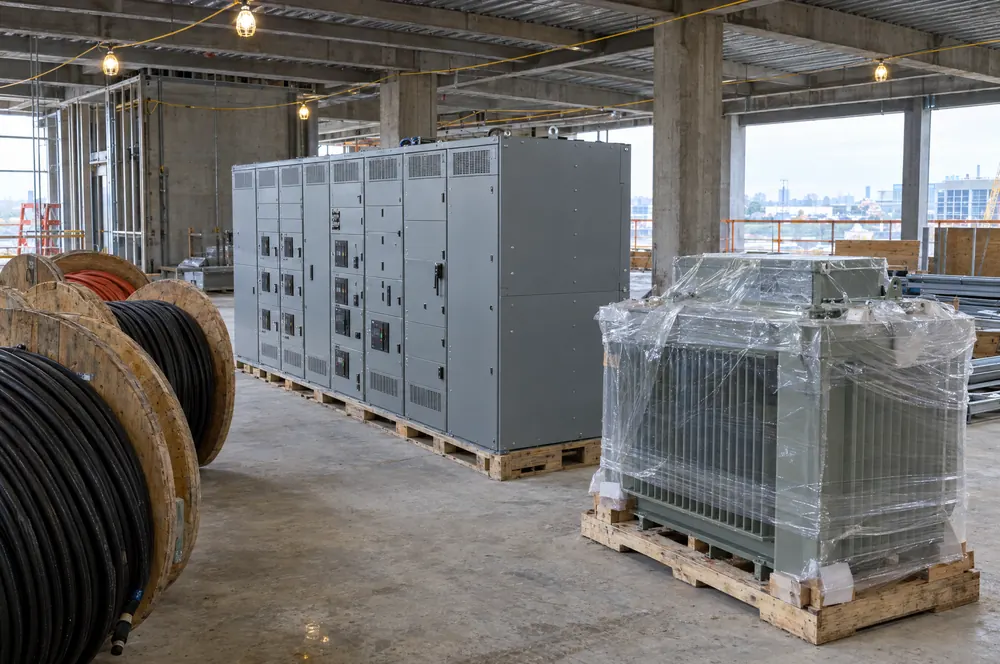
Installation floater insurance is an inland marine policy for property you're installing. It covers those materials while they're in transit, stored off site or sitting on the job, up to the point where the owner accepts your work or takes on the risk of loss.
For an electrical contractor, that's the expensive stuff on the delivery schedule:
- switchgear, switchboards and panelboards
- transformers and MCCs
- light fixtures, controls and emergency lighting
- wire on reels and wire already pulled into conduit
- EV chargers, standby generators and transfer switches
- PV modules, inverters, racking and batteries
It isn't a tools policy. Your meters, pullers and benders belong on an equipment floater. An installation floater follows the materials that become part of the building.
What an installation floater usually covers
| What it usually covers | What it usually doesn't |
|---|---|
| Gear and materials in transit to the job | Your own tools and test equipment |
| Materials stored at your shop or a storage yard for the job, if the form includes storage | Property after the owner accepts the work |
| Gear and pulled wire on site before acceptance, including theft, subject to the form's conditions | Damage to the building as a whole; that's builder's risk |
| Your share of a loss the GC's builder's risk leaves to you | Equipment owned by someone else that you're rigging; that's riggers liability |
How electrical materials get lost before acceptance
These examples are fictional. Each one happens in the window between delivery and sign-off.
Example scenario: the forklift and the switchboard
Example scenario: A main switchboard sits crated in the electrical room of a new medical office, three weeks before the utility sets the meter. The drywall crew's forklift backs into it and crushes two sections. The board isn't installed yet, so it's still the electrical sub's property. An installation floater may pay to replace the damaged sections, depending on its terms.
Example scenario: the stripped feeders
Example scenario: A shop pulls new copper feeders through conduit at a vacant strip center over a holiday weekend. Thieves cut the conductors at both ends and drag them out. The feeders were never energized, and the owner hasn't accepted anything. Whether the floater pays may depend on its theft conditions, like whether the site had to be fenced or locked.
Example scenario: the fixtures in storage
Example scenario: Forty LED troffers for a school renovation sit in the shop's warehouse waiting for the ceiling grid. A roof leak soaks the boxes. Some floaters cover job materials stored off site. Others limit storage or leave it to your shop's property policy. Check which one carries it.
Where installation floaters and builder's risk overlap
Riggers liability is a different policy
Setting limits and what it costs
Set the floater's limit to the most uninstalled material you'll have exposed at once on any single job. That's usually the week the gear package lands, not the average day. High-value batteries and inverters may need their own limits.
Many shops buy an annual floater that covers every job up to a per-job limit, then add coverage for an oversized project when it comes along. Others buy a floater for one big job. Either way, tell your agent when a single delivery will run past the per-job limit, before the truck shows up.
Keep a delivery log with dates, packing lists and photos of the staged gear. If something's stolen or crushed, that record shows what was on site and that it wasn't installed or accepted yet.
Ask how your form handles three things:
- Transit and storage: whether materials are covered on the truck and at your yard, and for how much
- Theft from the site: what security the form requires, such as a locked enclosure or fencing
- When coverage ends: at installation, at acceptance, or when the owner's interest begins
MoneyGeek puts the average installation floater for small electrical businesses near $61 a month ($732 a year). What you pay depends on your payroll and class codes, revenue, loss history, the type of electrical work you do and the limits you pick.
Which electrical shops need one most
Any shop that buys gear before it's installed carries this risk. It's sharpest for:
- Commercial and industrial shops with switchgear, transformers and fixture packages staged on site for weeks. See commercial electrical contractor insurance.
- Solar and storage installers with modules, inverters and batteries delivered before commissioning. See solar, EV and low-voltage insurance.
- Generator installers with a standby unit and transfer switch on a driveway pad waiting for the gas line.
- Service-change and rebuild crews that stage meter bases, panels and wire at several homes during the same week.
Shops working on a wrap-up should read our wrap-up insurance guide. The project policy often leaves your uninstalled materials and tools to you.
Installation floaters by state
No state electrical license requires a floater. Contracts and builder's risk terms do. But some markets put more uninstalled gear at risk at once:
- California: the Palisades Fire destroyed 6,845 structures in January 2025. Rebuilds mean new services, panels, PV and storage staged on many lots at once.
- Ohio: Intel pushed its New Albany fab's first module to 2030. Long, stop-start industrial jobs leave unaccepted electrical work exposed for years.
- Florida: Hurricane Milton cut power to a peak of more than 3.3 million customers in 2024. Storm waves bring rushed generator and transfer-switch installs.
- New Jersey: one state school-construction wrap-up manual treats subcontractor property not meant for the project as the sub's own risk.
Every state we're licensed in is on our state pages.
Related coverage
Frequently asked questions
Installation floater vs. builder's risk: do I need both?
Does an installation floater cover copper wire theft from a jobsite?
Will my installation floater pay if my meters get stolen?
How long does an installation floater cover a job?
Do I need riggers liability to set switchgear?
Ready to see what you'd pay?
Independent agents, 12+ A-rated carriers, and a licensed agent back to you within one business day.