
Home › Coverages › Commercial Electrical Contractor Insurance
Insurance for commercial and industrial electrical contractors
Commercial electrical contractor insurance is built around the contract: general liability with the additional insured, primary and waiver wording GCs require, enough limit to satisfy the insurance exhibit, often through an umbrella, plus bonds, an installation floater and workers' comp that survives a payroll audit. Industrial work adds riggers liability for owner-furnished gear and the risk of a claim when a mistake idles a client's production line.
- Since 2003
- 12+ A-rated carriers
- 28 states
- Independent agents
Start your electrician insurance quote
Takes about a minute. A licensed agent follows up.
Licensed in 28 states · NPN 7642818 · Since 2003
How commercial electrical contractor insurance gets tested
Commercial electrical contractor insurance gets tested twice: once when the GC's compliance desk reads your certificate, and again when something goes wrong on a job with a lot of money riding on it. The work is bigger, the paper is thicker and the claims can be, too.
Here's where commercial and industrial jobs tend to bite:
- The subcontract. Indemnity clauses, additional insured demands, higher limits and waiver wording you have to prove before you mobilize.
- Big gear. Switchgear lineups, MCCs, transformers and long feeder pulls with expensive material sitting on site for weeks.
- Energized work. Tie-ins, shutdown windows and troubleshooting live equipment, where arc flash and shock are real.
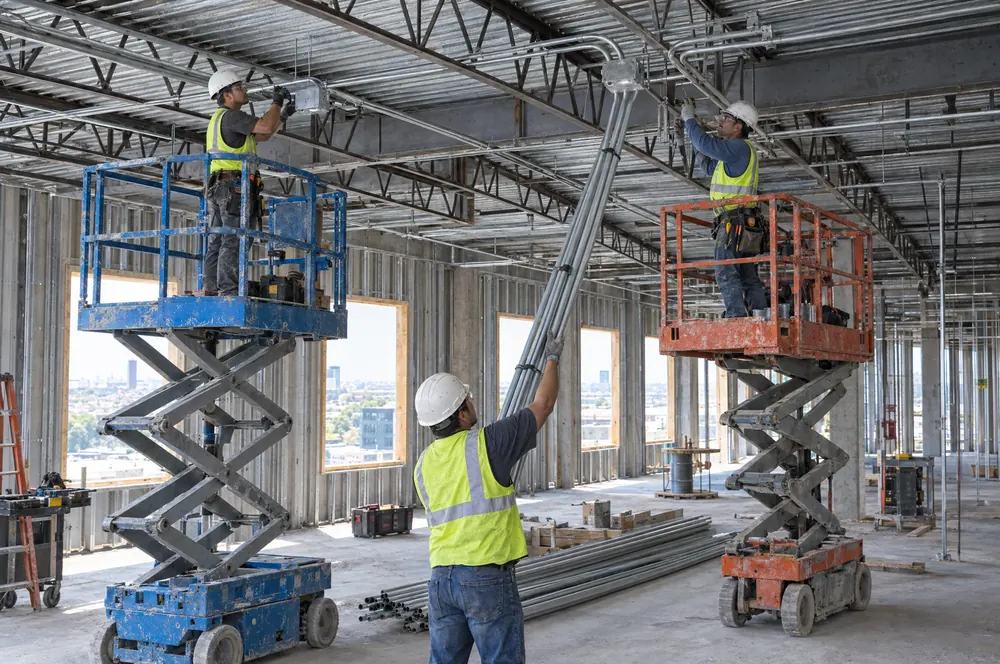
- Height and lifts. Scissor lifts, boom lifts and scaffolds on tenant build-outs, warehouses and parking structures.
- Industrial sites. A wiring mistake during a shutdown can leave a client's line idle, and the client will count every lost hour.
- Wrap-ups and audits. Big projects bring controlled insurance programs, plus payroll swings that surface at the comp audit.
The coverage commercial shops usually carry
General liability with contract endorsements (must-have)
Injury and property damage to others, with the additional insured, primary and waiver endorsements GCs ask for. General liability for electricians
Workers' comp (must-have)
Crew injuries, priced on payroll by class and trued up at audit. Workers' comp for electricians
Commercial auto (must-have)
Service trucks, box trucks and the people driving them. Commercial auto for electricians
Umbrella (usually required)
Extra limit above your GL, auto and employer's liability to meet the contract. Umbrella insurance for electricians
Performance and payment bonds (for bonded work)
Surety for public jobs and owners who want the electrical package bonded. Performance and payment bonds
Installation floater (often needed)
Gear and materials you're installing, until the owner accepts the work. Installation floater for electricians
Tools and equipment (often needed)
Your own tools plus rented lifts and pullers in your care. Tools and equipment insurance
Professional liability (for design-assist work)
Design-build, coordination studies and engineering you sell. Professional liability (E&O)
What GCs, owners and cities will ask you for
Start with the insurance exhibit, before you bid. It sets the limits and usually spells out additional insured, primary and non-contributory and waiver wording. Smaller shops often start at $1 million each occurrence with a $2 million aggregate, and plenty of commercial contracts want more than that. An umbrella is the usual way to get there.
Some cities set their own floor for the work you permit:
- New York City requires master and special electricians to carry at least $1 million of general liability per occurrence, at least as broad as ISO CG 00 01. Licensees pulling certain permits must also name the City as an additional insured.
- Pittsburgh, Pennsylvania requires $1 million per occurrence and $2 million aggregate with the City as additional insured before you can pull permits.
On federal construction contracts over $150,000, performance and payment bonds are required under FAR 28.102-1, and states run their own "Little Miller Act" rules for public work. NASBP says the two bonds together generally cost 0.5% to 3% of the contract price.
Industrial owners and GCs may also ask about your electrical safety program. Most of those questions point to NFPA 70E, Standard for Electrical Safety in the Workplace. OSHA lists it as consensus guidance, not an OSHA regulation. Arc-flash burns and shock are workers' comp exposures, so a documented program can help when underwriters look at your shop. If you sell arc-flash or coordination studies, that's engineering work and an E&O exposure.
Growing into commercial and industrial work
Each step up changes what you carry:
- The first GC subcontract. Blanket additional insured, primary and waiver endorsements, so certificates don't stall your start date.
- The first bonded bid. Sureties underwrite capital, capacity and character: CPA-prepared financials, a work-in-progress schedule, experience and your bank line. Start that relationship before you need the bond.
- Bigger payroll. Comp premium is a deposit on estimated payroll, and the audit settles it. A big job that doubles your field hours shows up as an audit bill if you don't update the estimate.
- The first wrap-up. Enrollment paperwork, a bid deduct and a CG 21 54 endorsement on your own GL.
- Megaprojects. Data centers, fabs and battery plants bring high umbrella demands, owner-controlled programs and strict certificate terms.
Frequently asked questions
How much insurance does a commercial electrical contractor need?
What does a GC mean by additional insured, primary and non-contributory and waiver of subrogation?
Does general liability cover a client's lost production if my work shuts down their line?
Do I need riggers liability to set switchgear?
Do I keep my own insurance on a wrap-up project?
More for commercial and industrial electricians
Ready to see what you'd pay?
Independent agents, 12+ A-rated carriers, and a licensed agent back to you within one business day.